Poster Mat - Longing for Knowledge with Peacock
- In stock, ready to ship
- Delivery in 5–7 business days
- Free worldwide shipping* on orders of €60 or more
* For deliveries to countries outside Europe, the United Kingdom (UK), North America, Brazil, and Japan, additional import duties, customs duties, import VAT, or customs clearance fees may apply depending on the respective delivery and production locations. These costs are to be borne by the recipient.
ARTLIA's art prints are produced according to standardized paper and canvas formats.
Depending on the aspect ratio of the original artwork and the chosen format, it may happen that the edges of the image are slightly adjusted to achieve a harmonious overall effect and high print quality.
For canvas prints, the ARTLIA team ensures that the main motif is placed as fully as possible on the front side. The side frame areas are continued in color and style to match the original image.
This is a deliberate and common production step with which the ARTLIA team ensures the aesthetic quality of each artwork.
One motif, many styles: discover our diverse collection


Poster mat board - Longing for Knowledge with Peacock
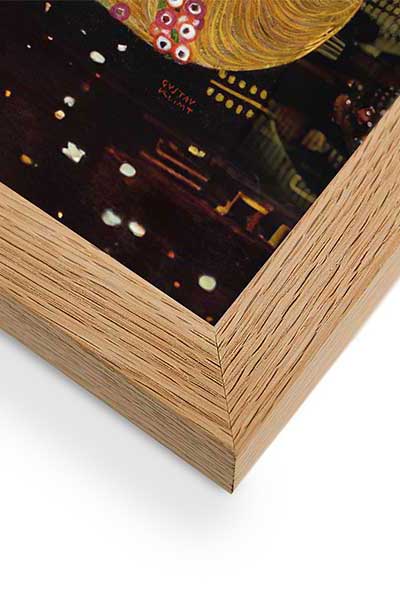
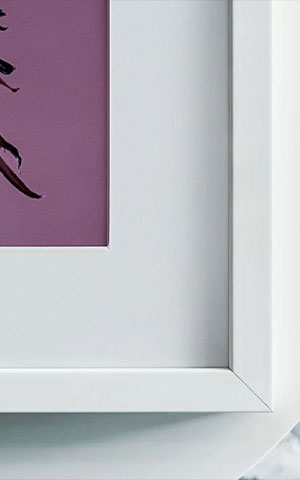
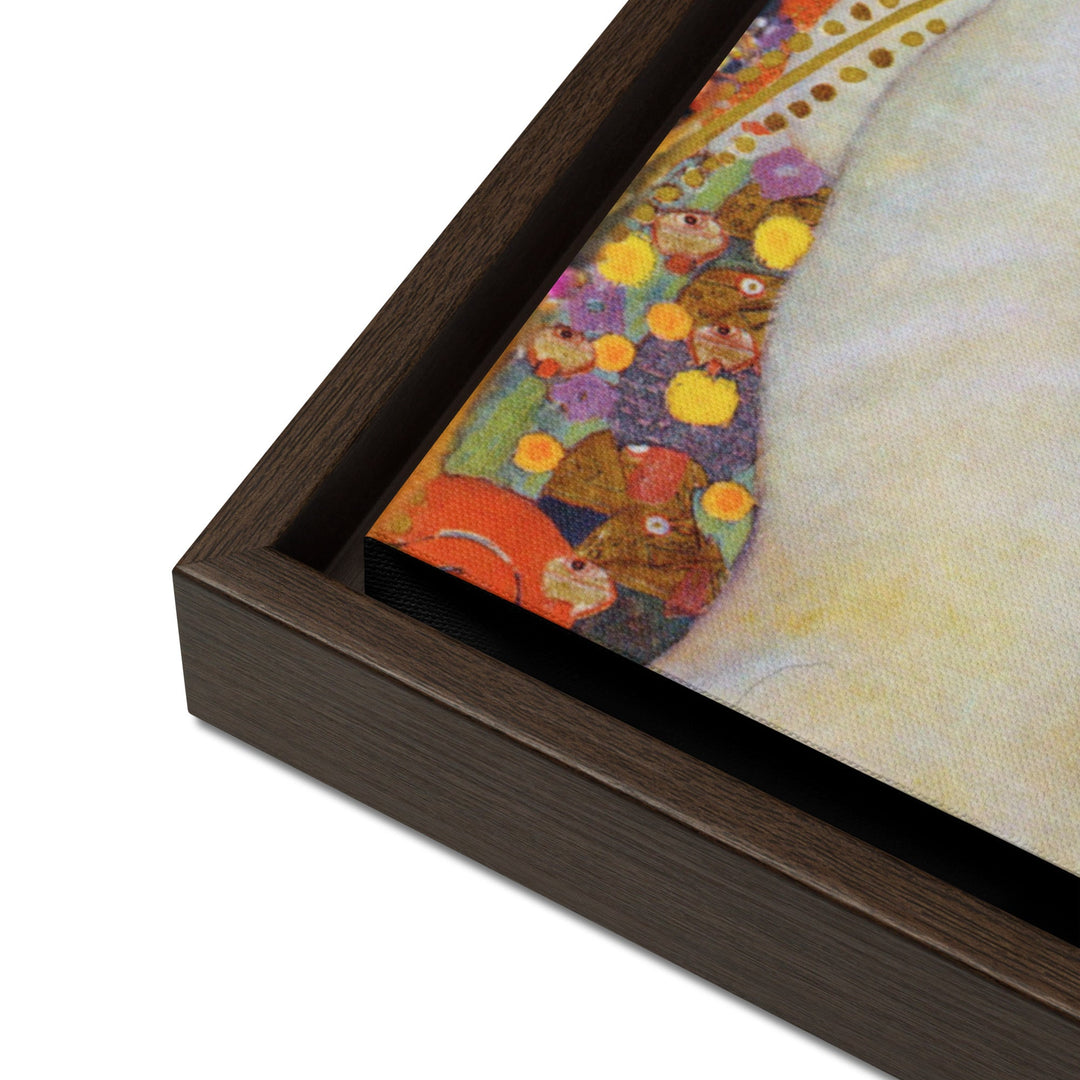
This poster - Longing for Knowledge with Peacock with a smooth, white, matte cardboard mat gives any room a smart look. The poster is printed on high-quality, matte paper and framed with a semi-hardwood alder frame.
• Paper thickness: 0.26 mm
• Paper weight: 189 g/m²
• Alder, frame made of semi-hardwood
• Acrylic front protection
• White, matte mat board
• Material for hanging included
• 21 cm x 30 cm poster corresponds to size A4

Books, Knowledge, and the Peacock
Longing for knowledge in contemporary Korean folk art
Those encountering Korean folk painting (Minhwa) for the first time are often surprised by its symbolic depth and narrative visual language.
A central motif of this tradition is what is understood here as "longing for knowledge" – inspired by the classical genre of Chaekgeori (책거리).
At first glance, the image appears like a decorative still life of books and precious objects.
But behind this apparent order lies a cultural ideal: the desire for education, intellectual refinement, and both aesthetic and inner development.
What does "longing for knowledge" (Chaekgeori) mean?
Chaekgeori originated in the late Joseon Dynasty (18th–19th century).
Typical are depictions of stacks of books, shelves, and objects of learning – such as brushes, inkstones, ceramics, flowers, or incense.
Books stood not only for knowledge but also for:
- self-cultivation
- moral maturity
- personal and societal aspiration
Even people without official scholar status decorated their spaces with such images – as a quiet but conscious sign of their longing for knowledge.
Extension of tradition: Animals in Chaekgeori
Traditionally, Chaekgeori focused on objects.
This contemporary series expands the genre by integrating symbolic animals into the visual world.
The series includes four animals of central importance in East Asian visual language:
- Dragon
- Phoenix
- Crane
- Peacock
Each animal represents a specific human ideal.
This work is dedicated to the peacock.
The peacock in East Asian symbolism
In East Asia – including Korea – the peacock stands for:
- beauty and dignity
- cultural refinement
- prosperity and intellectual wealth
- the connection of inner value and outer form
Its magnificent plumage symbolizes not mere vanity, but perfection through cultivation:
Beauty as a result of inner order and knowledge.
The peacock thus embodies an ideal where education is not hidden but becomes visible – calm, balanced, and confident.
Why a peacock among books?
In this work, the peacock moves among books, writing utensils, and plants.
He does not rule over things – he resonates with them.
The books stand for learning, discipline, and intellectual depth.
The peacock symbolizes what grows from this:
aesthetic awareness, inner dignity, and cultivated presence.
Thus, this Chaekgeori does not tell of power or achievement,
but of knowledge as a source of elegance, self-respect, and cultural identity.
A different way of seeing space and meaning
For international viewers, Chaekgeori often appears unusual:
- stacked objects beyond realistic perspective
- overlapping layers
- fluid boundaries between reality and symbol
The focus is not on faithful representation, but on meaning:
Not: "What does it look like?"
but: "What does it stand for?"
The peacock fits seamlessly in – as a living symbol of the visibility of knowledge in everyday life.
Conclusion
This peacock-centered work understands longing for knowledge as a pursuit of cultivated wholeness.
Knowledge is not shown here as a means for social advancement,
but as a foundation for beauty, dignity, and inner balance.
A calm, poetic visual world –
merge into a harmonious unity in education, aesthetics, and meaning.